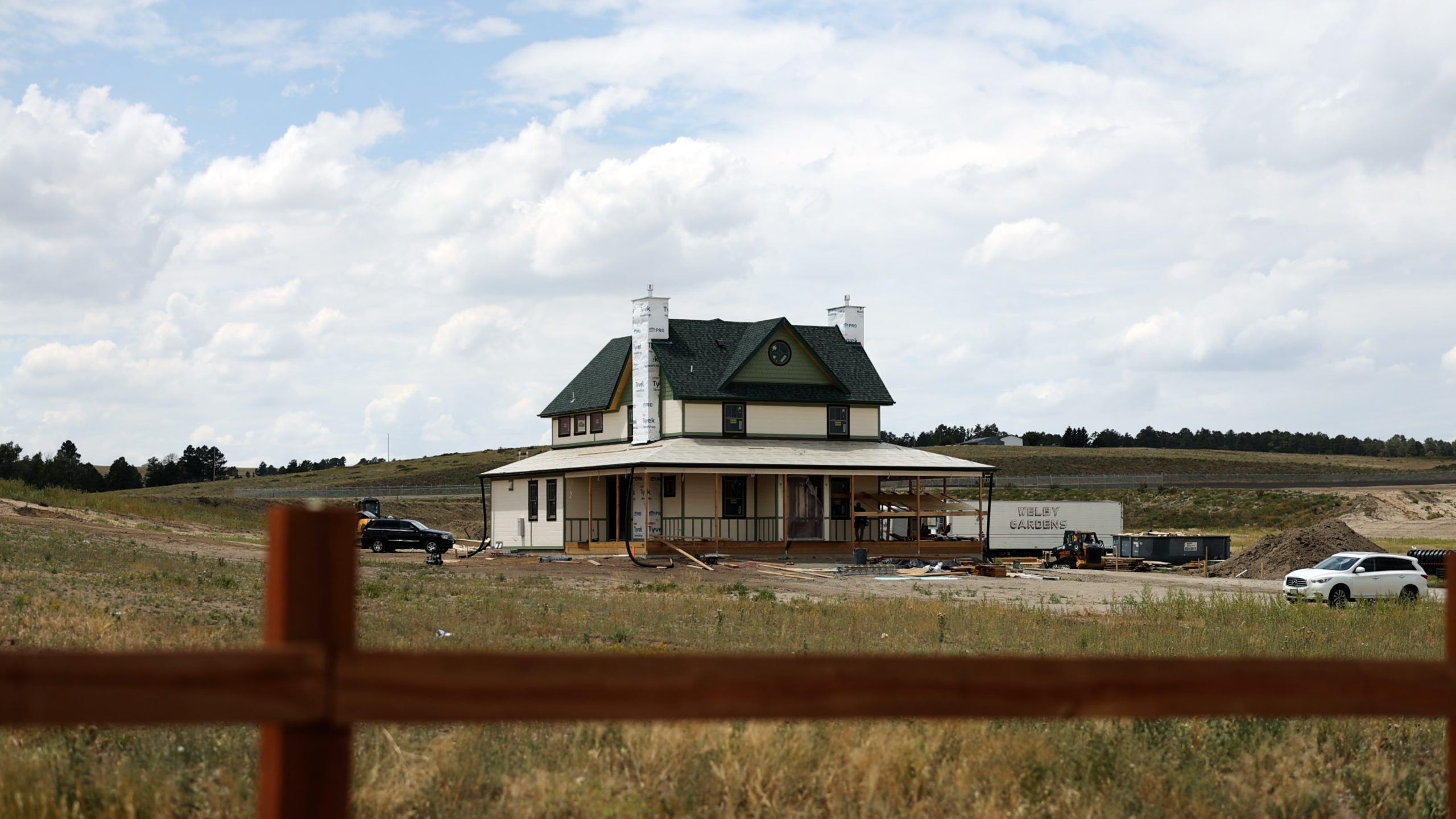
We just broke ground on a home in Colorado Springs that, on paper, looked like a teardown.
Foundation past the point of repair. Sloping floors. Cracks running through the walls. Most buyers would have kept driving.
The homeowner didn’t. Here’s what they’re doing instead: lifting the entire house, replacing the foundation, adding a full basement underneath, and gutting the structure down to the studs. The basement is being built out as an ADU with a private entrance, which they plan to rent out to help cover the mortgage.
Purchase price was around $190,000. Construction will run another $300,000 to $400,000. Projected appraised value when it’s done? More than $750,000.
That’s roughly $150,000 of built-in equity at closing, plus rental income from day one.
The first question we get when we tell people this story is always the same: how do you finance something like that?
It’s a fair question. Most people assume you need to either be sitting on cash or that the bank will laugh you out of the room when you bring them a house that isn’t currently habitable. Neither is true. There are real loan products built for exactly this kind of project, and most homeowners in Colorado Springs have never heard of them.
Here’s how it actually works.
Renovation Loans Use the Future Appraised Value, Not Today’s
This is the single most important thing to understand about financing a renovation.
A standard mortgage looks at what the house is worth right now. If the house is uninhabitable, the appraisal comes back low, the loan is denied, and the deal dies.
A renovation loan works differently. The lender sends an appraiser out who looks at the architectural plans, the scope of work, and comparable finished homes in the area. The appraisal is written based on what the home will be worth after the work is done. The loan is sized to that future value.
That’s how a $190,000 purchase plus $400,000 in construction can get financed into one loan, on a house that wouldn’t qualify for a conventional mortgage in its current state.
This single mechanism is what makes ambitious renovation projects possible for normal buyers, not just investors with cash to burn.
The Five Financing Paths Most Colorado Springs Homeowners Don’t Know About
When homeowners ask us how to finance a home renovation in Colorado Springs, the conversation usually goes through five real options. Which one fits depends on whether you already own the home, whether the home is currently livable, and what you’re trying to do.
1. Renovation Loans
Renovation loans bundle the purchase price and the cost of improvements into a single mortgage based on the future appraised value of the property. For owner-occupied homes, down payments can be as low as 3 to 5 percent if you qualify for first-time homebuyer programs.
This is the loan that makes “buy a fixer-upper and turn it into your dream home” actually possible.
2. Construction Loans
Construction loans are designed for ground-up custom builds or major structural work. The funds are released in stages called draws, paid out as specific milestones are completed (foundation poured, framing complete, drywall installed, etc.). You only pay interest on the amount drawn during construction, and once the build is finished, the loan converts into a conventional mortgage.
For a custom home build in Colorado Springs, this is almost always the right structure.
3. Home Equity Lines of Credit (HELOCs)
If you already own your home and you locked in a low interest rate during the 2020-2021 window, the last thing you want to do is refinance to fund a renovation. A HELOC lets you borrow against your home’s equity without touching your existing mortgage.
Some lenders will write a HELOC based on what your home will be worth after the renovation, not just what it’s worth today. That can dramatically increase how much you can borrow.
4. Land Loans
Buying a lot to build on later? Land loans cover the purchase, and when you’re ready to build, the construction loan typically pays the land loan off. This lets you secure the right piece of property now without committing to construction timelines you aren’t ready for.
5. ADU and Investment Property Financing
Adding an accessory dwelling unit (ADU), basement apartment, or rental space is one of the smartest moves a Colorado Springs homeowner can make right now. Rental demand is high, lot sizes here support detached units in many neighborhoods, and the cash flow can offset a meaningful portion of your mortgage.
There are loan products specifically built around ADUs. They take the projected rental income into account when underwriting, which often means you qualify for more than you would otherwise.
A Pre-Approval Doesn’t Hurt Your Credit
One of the things we see slow homeowners down most is the assumption that talking to a lender means a hard credit pull and a bunch of paperwork.
It doesn’t.
A renovation loan pre-approval typically starts with a soft credit pull. No hard inquiry. No ding to your score. The lender gives you a clear picture of what you actually qualify for, and you decide what to do from there.
If you’re trying to figure out whether a renovation project is even realistic, that 30-minute conversation is the cheapest, fastest way to find out.
How We Approach Financing Conversations With Our Clients
We’ve been building, renovating, and lifting homes in Colorado Springs long enough to know that the financing piece is where most homeowners get stuck. Not because the math doesn’t work, but because they don’t know what’s possible.
That’s why we work directly with a Colorado-based loan officer who specializes in construction and renovation projects. When a client comes to us with a project that needs financing, we make the introduction. They get a real conversation with someone who understands construction draws, renovation appraisals, and the full range of products that fit their situation.
We don’t take a fee for the referral. We do it because the projects we love most are the ones that don’t happen without the right financing structure. The Chestnut project we mentioned earlier is one of those.
The First Step Is Always a Real Conversation
You don’t need to have your financing figured out before you talk to us. You don’t need to know which loan product fits. You don’t even need to be sure your project is feasible.
What you need is a contractor who can walk your property, listen to what you’re trying to accomplish, and give you a real estimate. From there, if financing is part of the picture, we’ll connect you with the right people.
The Chestnut project started exactly that way. So did most of the projects we’re proudest of.
Schedule a consultation with Sanderson Quality Construction.